Who really owns this, and can you prove it?
Every answer humanity has produced so far has been some variation of trust. Trust the bank. Trust the ledger. Trust the blockchain. Westwyrd exists because there is now a way to answer that question without trust. Mathematical certainty, measured on quantum hardware, anchored to physical documents, flowing through zero-knowledge proofs to settlement rails that terminate in regulated accounts.
Quantum Attestation on Real Silicon.
Document hashes are encoded as phase rotations in multi-qubit circuits and executed on 156-qubit superconducting quantum processors. The measurement is irreversible. The laws of quantum mechanics guarantee that the attestation record cannot be duplicated, backdated, or contradicted. No notary, no court, no agency has ever produced a proof of existence that operates at this level.
Prove custody without exposing anything.
Groth16 circuits compile custody attestations into 188-byte proofs that verify in constant time on any EVM chain. An adversary observing every transaction on L1, L2, and L3 recovers less than 3% of the custody state. The remaining 97% is mathematically hidden. The ZK proofs fill the gap between what the world can see and what actually exists.
Documents prove custody. Proofs unlock settlement.
The document proves itself through its hash. The hash proves itself through the ZK circuit. The circuit proves itself through the on-chain verifier. The verifier proves itself through the quantum attestation. The attestation proves itself through the laws of physics. There is no custodian to trust. There is no auditor to rely on. There is a mathematical proof, forgeable by no one.
Weave energy, fold truth.
Generative models optimize for plausibility—media that looks real. WEFT optimizes for provenance—media that is verifiable. zkDAWN executes entirely on-device, binding volumetric media formations directly to a STARK proof. The result is absolute data residency and a cryptographic chain of custody from creation to settlement.
Six agents. One executive cortex.
DAEDALUS is not a chatbot. It is a multi-agent orchestration system running entirely on local hardware. Vision, coding, architecture, memory, auditing — each agent is specialized, each is bounded, and all are arbitrated through a multi-perspective logic transformer that produces deterministic, verifiable decisions. When agents disagree, the system mediates. When they agree, it confirms. When consensus fails, it pauses and escalates. No hallucinations. No unbounded loops. No cloud dependency.
Absence is a defensive primitive.
Umbra produces zero operational signal — no network traffic, no disk activity, no power signature, no electromagnetic emission. A vault that cannot be detected cannot be characterized. A vault that cannot be characterized cannot be attacked. The design assumes an adversary with physical access, unlimited computation, and legal authority to compel cooperation. Even then, the assets remain cryptographically inaccessible without distributed custodian shards that never exist in the same location.
Every relationship is an edge. Every proof is a node.
The entire provenance chain — from originating instrument through custody attestation through settlement finality — lives as a traversable knowledge graph. Documents become nodes. Ownership becomes edges. Proofs link custody to settlement. Witnesses anchor partitions to Merkle roots. The graph doesn't just store data — it makes the relationships between data queryable, auditable, and cryptographically verifiable in real time.
From quantum measurement to regulated bank account.
The settlement pipeline was optimized by a 32-qubit quantum circuit on 156-qubit hardware. It evaluated 4.3 billion possible path configurations and found the optimal route: custody attestation to L1 anchor to institutional credit facility to Fedwire MT103 to ISO20022 to regulated escrow. Total latency: 4.3 days. The crypto clears in hours. The fiat conversion is the bottleneck — and the architecture is designed around it, not despite it.
Sovereign OTC swaps with zero counterparty risk.
Our BaaS platform enables direct, peer-to-peer atomic swaps between sharded L1 cold-storage UTXOs (wUTXO) and Base/Mainnet liquidity pools. Powered by deployed ZKAttestedHTLC and OracleConditionalHTLC smart contracts, it eliminates bridge wrapping vulnerabilities and manual signing pathways.
Verify biological identity on-chain in zero-knowledge.
HQLOS enforces executive sybil-resistance and health custody. Using Groth16 ZK-SNARKs on the BN128 curve, GenomeSieve mathematically validates 650k+ SNP genomic data points against an on-chain IdentityCommitment without exposing raw genetic files.
Every Asset Has a Genealogy.
Every asset that has ever been tokenized, securitized, or bridged carries an origin — a moment where a physical instrument was created and delivered. That moment is the weakest link. It exists as paper in a filing cabinet, a scan on a hard drive, a reference number in a database that could be altered by anyone with admin access. The entire edifice of modern finance rests on the assumption that these origin documents are authentic.
Westwyrd doesn't assume. It proves. Document hashes become nodes in a knowledge graph. The graph generates Merkle roots. The roots feed into zero-knowledge circuits. The circuits produce Groth16 proofs. The proofs verify on-chain without revealing the underlying documents. And the quantum attestation layer makes the entire chain physically irrefutable.
This is not a crypto project. It is not a quantum experiment. It is an institutional custody architecture that uses quantum physics, zero-knowledge cryptography, and autonomous AI agents as its verification layer — because those are the only tools capable of producing proofs at the level of certainty this asset class requires. The loop closes.
Architectural Pillars.
The financial system has always operated on layers of mediation. A bond is issued. A custodian holds it. A trustee certifies the custodian. An auditor verifies the trustee. Each layer adds cost, delay, and the possibility of error. Westwyrd collapses these layers into autonomous mathematical verification.
Off-Chain Asset Quarantine
Every asset entering the system passes through an algorithmic containment sieve before touching any ledger. Adversarial submissions are accepted silently, quarantined without acknowledgment, and embedded with cryptographic canary tokens that track propagation. The attacker receives success. Their payload is isolated. Zero signal, total containment — the protocol of absence as a defensive primitive.
Securities Account Control
Pursuant to UCC § 8-106(d)(2), the bridge between legacy paper custody and on-chain finality is mathematical, not contractual. No trust agent is required because the cryptographic witness string replaces the human attestation. Settlement occurs at T+0 — the instant the proof verifies, the ownership transfers. The entire mediation layer of trustees, escrow agents, and clearing houses is replaced by a single circuit verification.
Strategic Technology Stack
Document hashes are encoded as phase rotations in multi-qubit circuits and executed on 156-qubit superconducting processors. The measurement is irreversible — the laws of quantum mechanics guarantee the attestation cannot be duplicated, backdated, or contradicted. Orchestration runs on dedicated silicon within a hardened perimeter, while the quantum layer provides burst attestation on demand through enterprise superconducting hardware.
Zero-Knowledge Attestation
Groth16 circuits compile custody attestations into 188-byte proofs that verify in constant time on any EVM-compatible chain. An adversary observing every transaction across all settlement layers recovers less than 3% of the underlying custody state. The remaining 97% is mathematically hidden — not encrypted, not obfuscated, but provably unknowable without the witness. This is the difference between hiding information and making it physically impossible to extract.
Algorithmic neutralization of adversarial liquidity vectors.
The Adversarial Legacy Allocation
During a high-velocity intake phase for a syndicated counterparty, Westwyrd's SAP-F architecture detected critical Virtual Data Room (VDR) variance and active forensic obfuscation. The adversarial principal operated under an illicit structural delusion, attempting to weaponize our zero-knowledge protocols as an exit-liquidity trap — seeking to instantly digitize strictly unverified, legacy assets into scalable High-Frequency Trading capital. The primary objective of the counterparty was to extract liquid utility while forcing all systemic AML/KYC regulatory liability exclusively onto the institutional node operators.
Protocol Execution
- Algorithmic Hold TriggeredPre-deployment telemetry isolated the variance. Cryptographic parameters controlling the genesis allocation were functionally severed, simulating a terminal bricking of the asset transfer vectors laterally.
- Asymmetric Liability ShieldingBy halting physical-to-digital mapping upon footprint variance, the protocol systematically insulated the ledger. We refused to manufacture institutional risk on behalf of external shadow-state maneuvering.
- Zero-Separation ArchivalSynchronous communications were permanently suspended to blockade linguistic manipulation. All forensic telemetry — including SQLite browser artifacts of the obfuscation attempt — was aggregated, sealed, and firmly stored.
Structural Forensic Verification
Localized Node Autonomy
Most institutional systems depend on centralized infrastructure — data centers, cloud providers, corporate networks. When those fail, everything fails. Westwyrd inverts this assumption. Every node in the architecture runs on dedicated silicon within a hardened perimeter — zero cloud dependency, zero telemetry emission, and full operational autonomy.
The node matrix operates from the edge by default, not as a fallback. Multi-agent orchestration, zero-knowledge proof generation, knowledge graph traversal, and quantum attestation bursts all execute on-device. Absence of signal is the first layer of defense. What cannot be observed cannot be characterized. What cannot be characterized cannot be attacked.
17-Domain Verification Matrix
Westwyrd doesn't rely on probabilistic audits. Master legacy inputs traverse a rigorous 17-Domain forensic pipeline running across high-compute Apple M-Series matrices before striking the mainnet.
Raw data is analyzed across temporal latency, fee profiling, Benford statistical deviation, and cross-chain taint mapping. This yields an uncompromising ‘Institutional Grade’ score matching top-tier regulatory standards, compressed precisely into a single zero-knowledge Merkle Root for global dissemination.
Cryptographic Validation
Bypassing the era of falsifiable paper-trail certificates, Absolute Custody is proven dynamically via structural on-chain telemetry mapping.
By tracking low-velocity dormancy cycles, ensuring multi-path randomized HD derivation via Poseidon hashes, and executing rolling OFAC matching, Beneficial Ownership is inherently tied to the cryptographic witness string. No third-party trust agent is required to enforce the truth.
Institutional Architecture Atlas.
Institutional-grade topological cross-sections of the Paramount Quantum FaaS infrastructure.
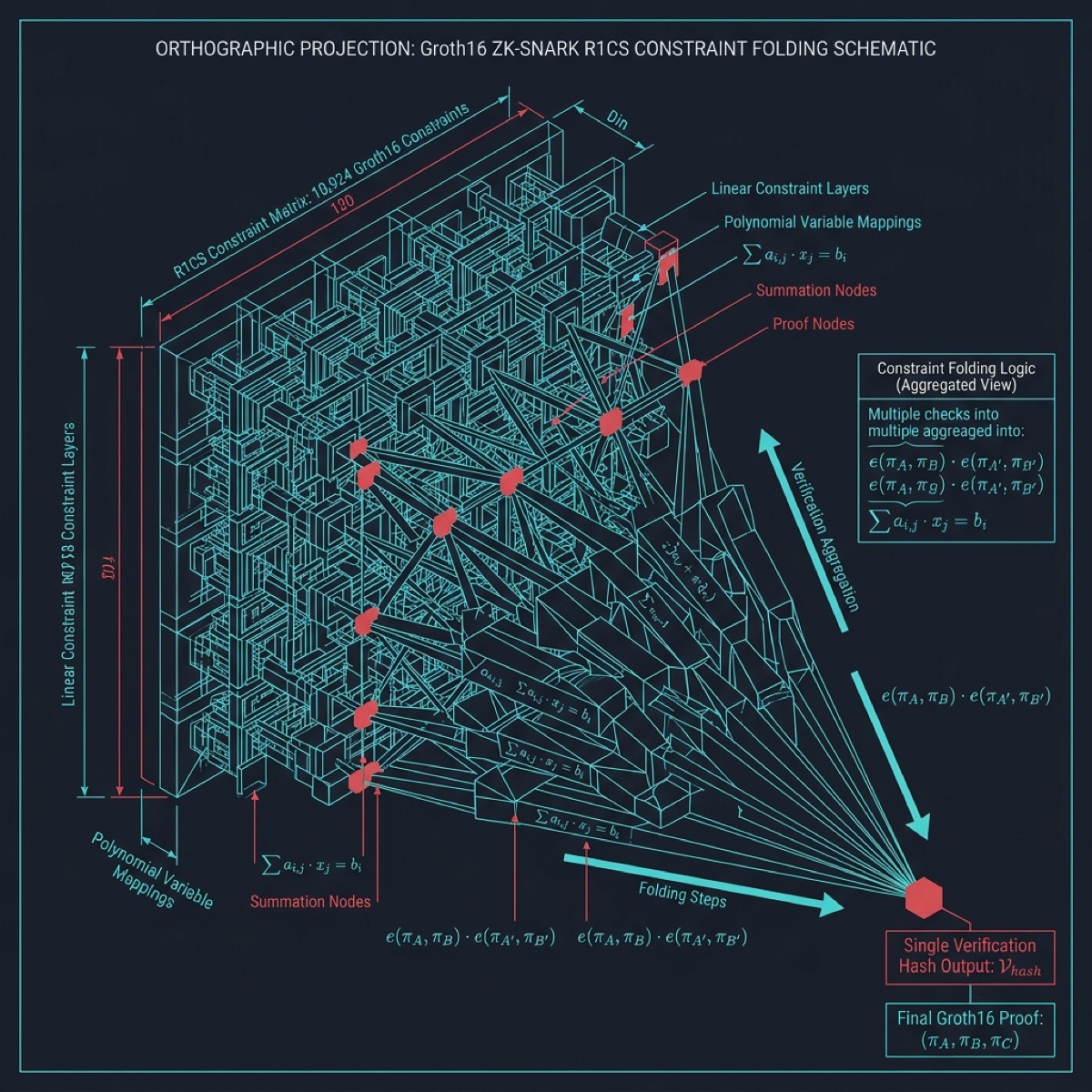
Groth16 R1CS Constraint Folding Schematic
2.8M non-linear constraints mapped into Groth16 polynomial format for ZK verification.
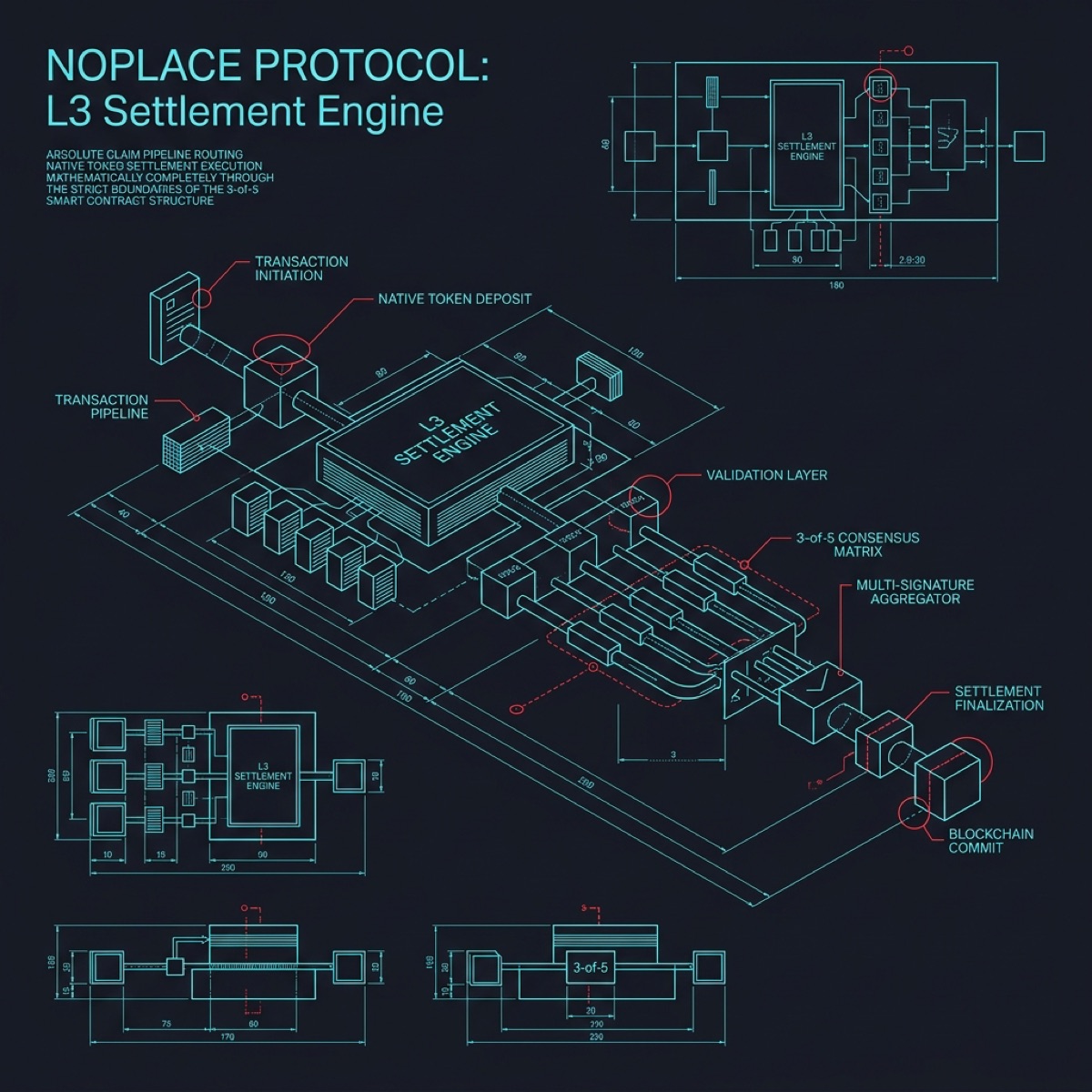
Settlement Protocol Architecture
Atomic T+0 settlement routing through the NOPLACE multi-sig escalation protocol.
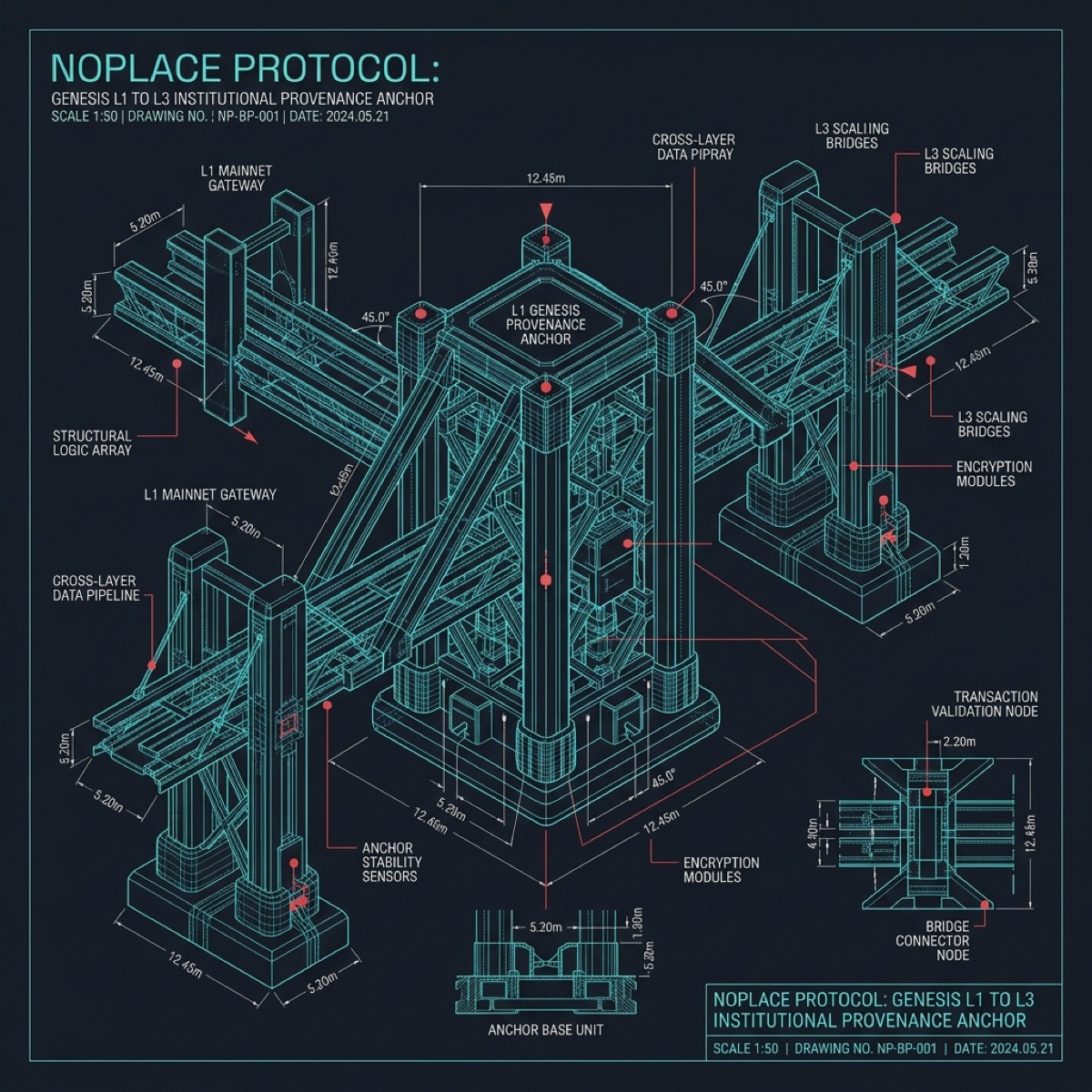
Institutional Provenance Anchor
Root custody hashes bridging traditional paper instruments into the digital verifiable layer.
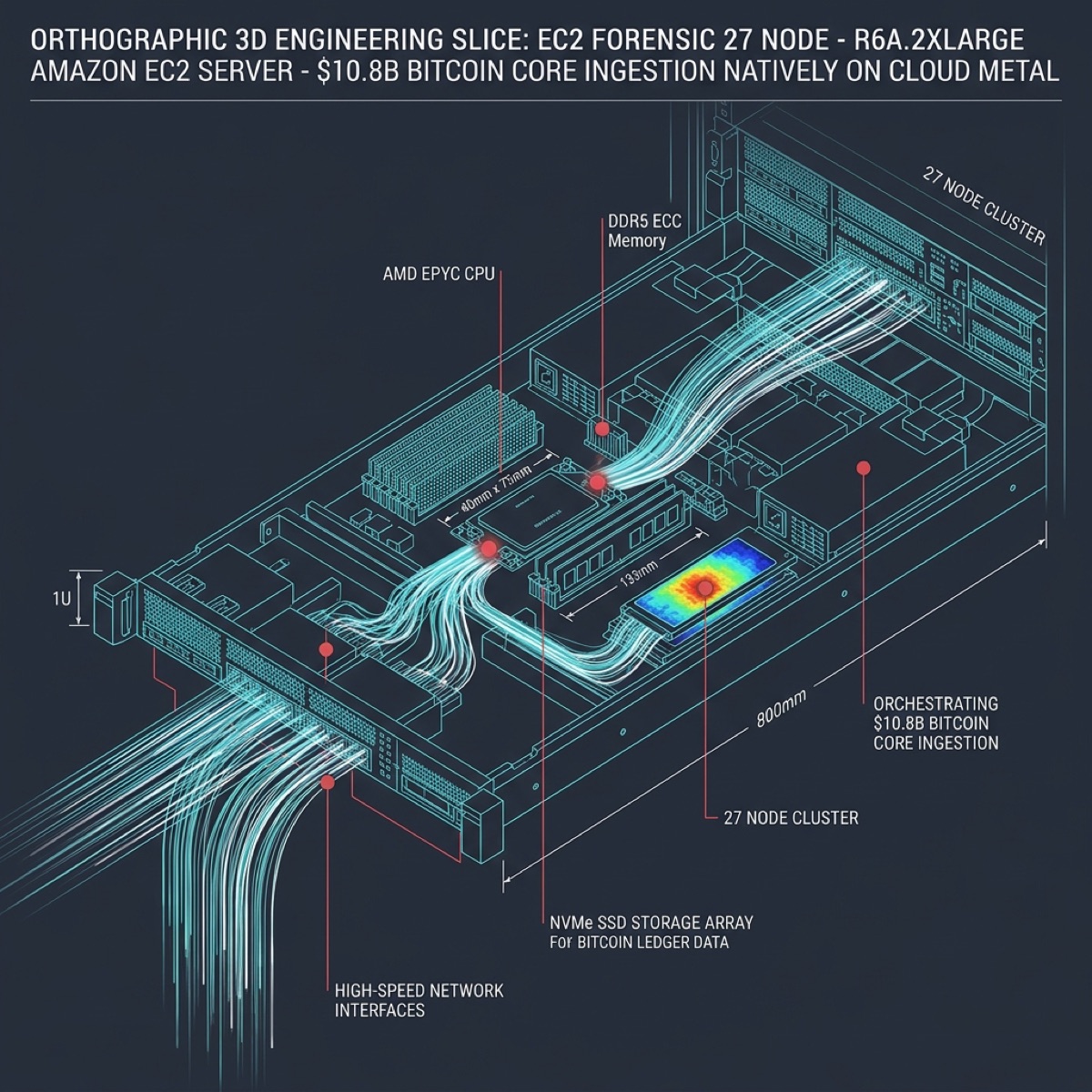
Distributed Forensic Node Topology
AWS EC2 distributed footprint for continuous transaction telemetry and anomaly detection.
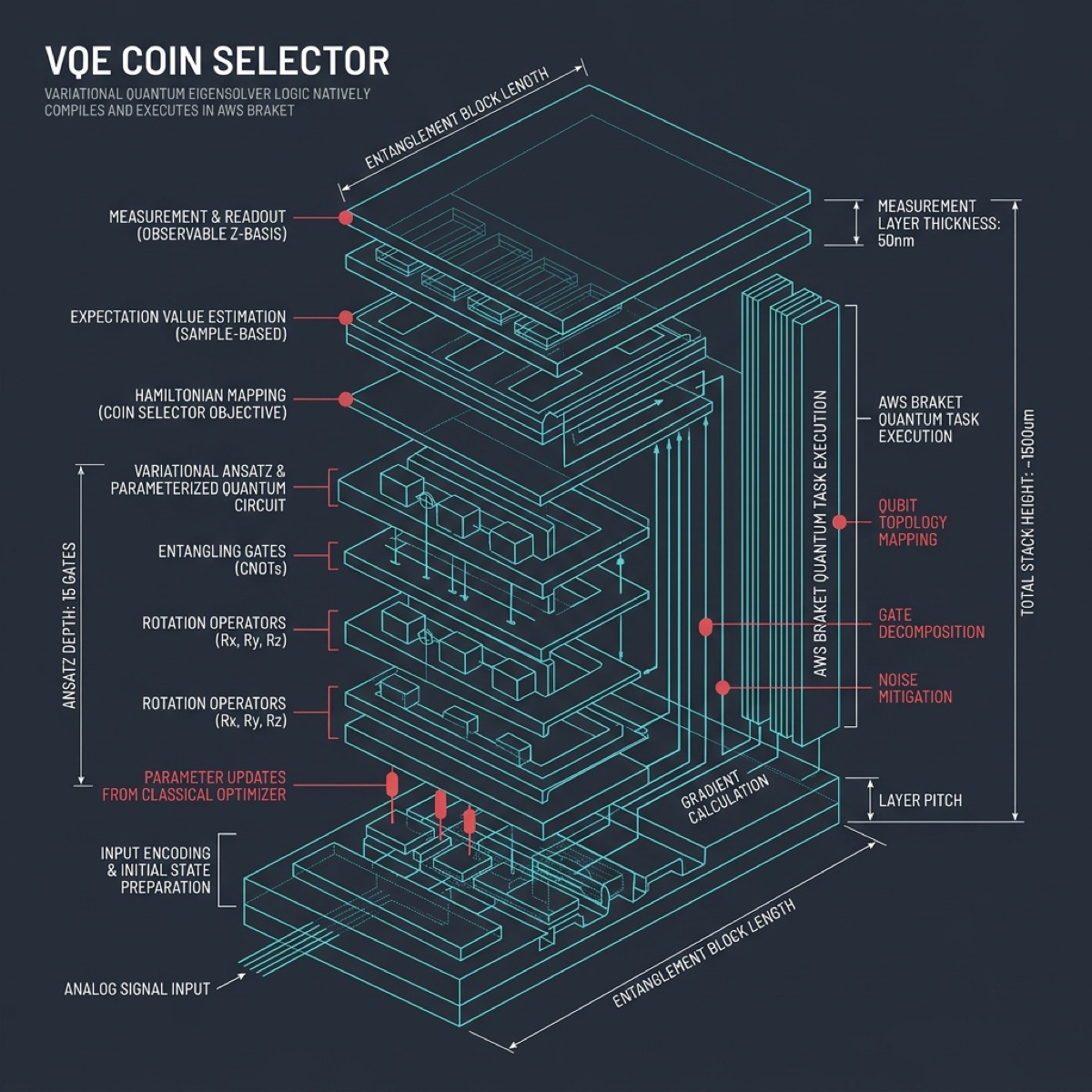
Variational Quantum Eigensolver
Quantum heuristic optimization for UTXO coin selection minimizing on-chain footprint.
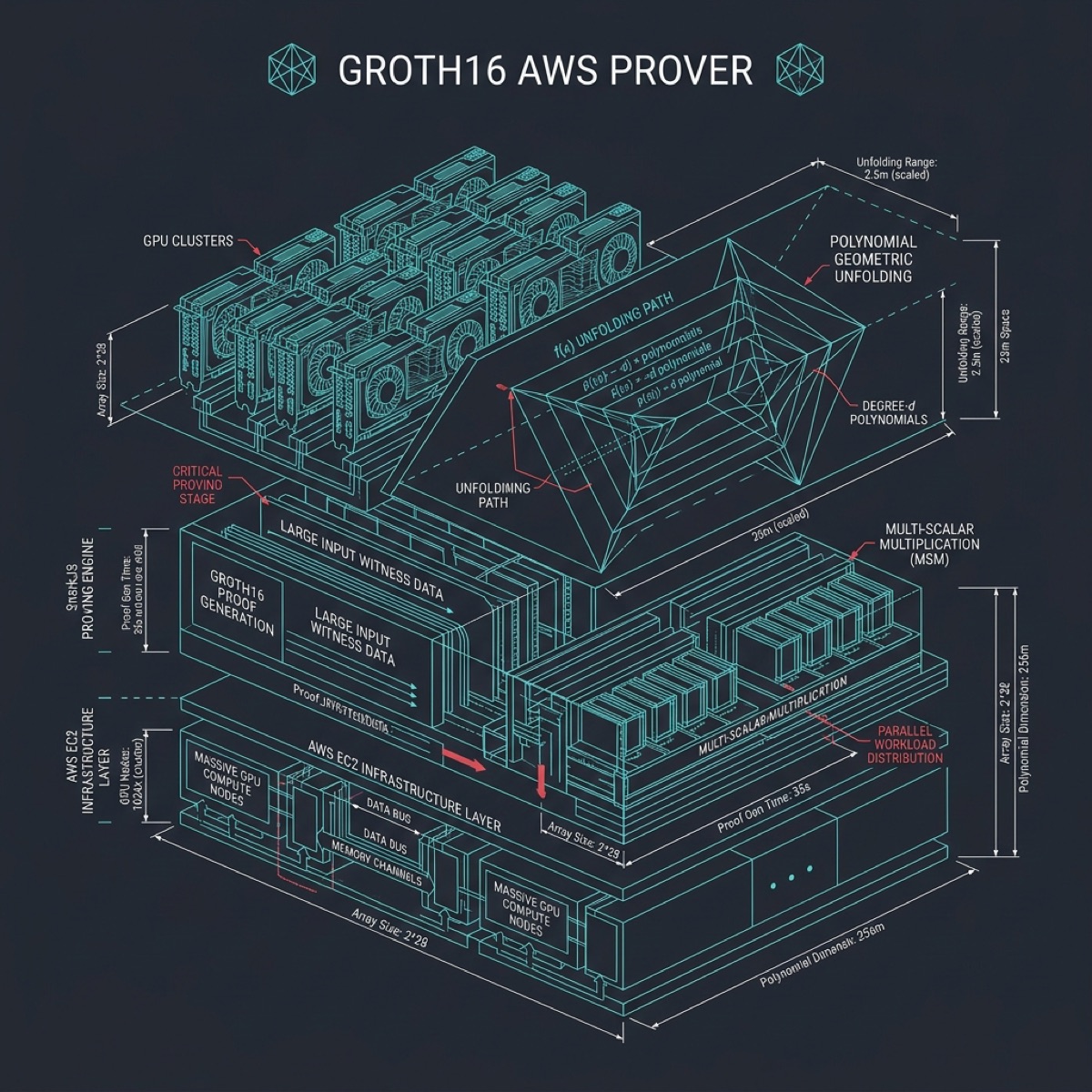
Cloud-Native Groth16 Proving Engine
Parallelized worker nodes for generating zero-knowledge proofs under strict latency bounds.
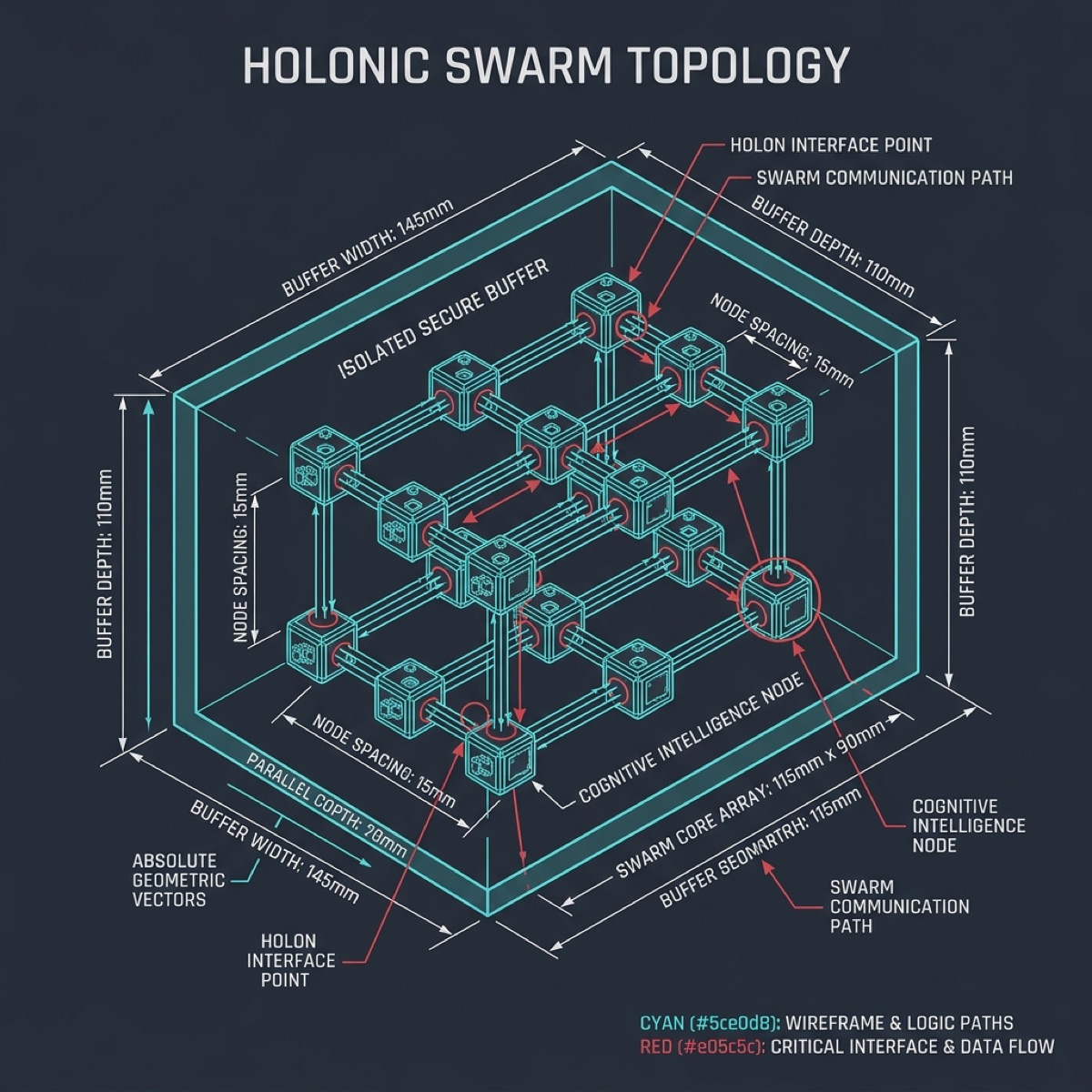
Holonic Swarm Coordination Topology
Hierarchical agent architecture orchestrating distributed off-chain and on-chain logic.